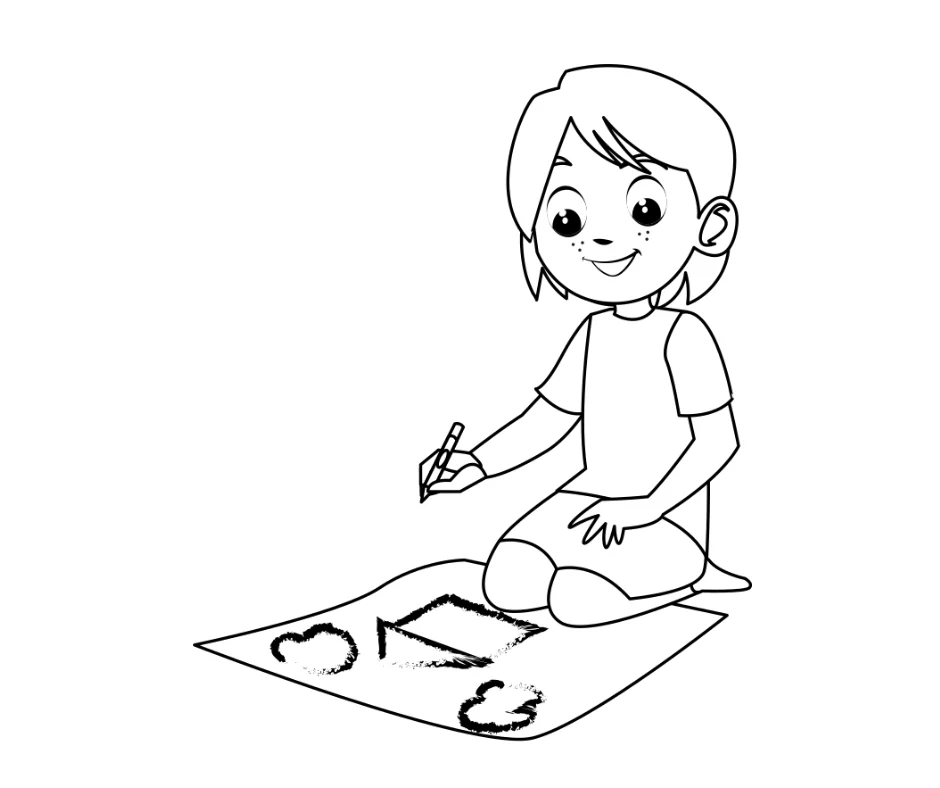
I was working with a ten-year-old and her mother came to me frustrated. The child couldn't focus. She wouldn't sit still. She got distracted constantly. At school they'd started using the word "assessment" in a way that made the mother nervous.
I watched the child for about twenty minutes. And then I asked the mother: when she's building something, does she stay with it?
The mother thought about it. Yes, she said. She could spend three hours on her own with Lego and not look up.
I said: that's not a focus problem. That's a mismatch problem.
What focus actually is
Seed Skill number six in the 7 Seeds framework is Focus and Purpose. Of all seven seeds, this is the one that gets the most misunderstood, because the cultural version of focus is about narrowing, about reducing, about holding still.
That's half of it at most.
Full focus is a range. On one end, laser focus: the ability to direct attention to one specific thing and hold it there. On the other end, broad focus: the ability to maintain peripheral awareness, to take in the whole picture, to notice what's happening in the wider field while staying present.
Both are essential. Neither alone is sufficient. The child who can only narrow loses context. The child who can only broaden can't complete anything. What you want, for life, for learning, for everything, is the ability to move between them deliberately, to know which one the moment calls for and to shift.
That's what focus is. Not concentration. Mobility.
Telling a child to focus more is like telling someone to run faster without addressing whether they know how to run.
Why it develops naturally when conditions are right
Focus develops from the body outward and from the outside in, at the same time.
Eye control comes first. The eyes are the original focusing mechanism. A child who hasn't developed smooth eye tracking, who can't move their gaze smoothly from near to far, who loses their place on a page because the eyes skip, that child will spend enormous energy compensating for what should be automatic. There's nothing left for the content.
Then comes attention itself: the ability to hold, release, and redirect. This develops through play, through activities that require shifting between types of awareness, through the natural back-and-forth of childhood investigation. Children throw rocks into puddles and watch the ripples. They step on cracks and not on cracks. They follow a bug across the ground. All of that is focus training, the real kind, and it happens without anyone organising it.
When those opportunities are removed, when childhood becomes predominantly indoor, screen-based, and adult-directed, the natural development stalls.
I've seen many children who couldn't focus in a classroom who could focus perfectly well in a garden. That's not incapacity. That's an environment that isn't meeting the developmental need.
What you can actually do
This is the part that matters. Because focus can't be taught by announcing it, but it can be built, deliberately, through the right conditions.
Three things that work:
First, watch rather than redirect. When a child is deeply absorbed in something, even if it isn't what you'd choose for them, that absorption is focus being practised. Leave it alone. The content matters less than the capacity.
Second, activities that require shifting between near and far, between broad and narrow, build the range. Ball sports. Tracking moving objects. Playing music. Building things that require you to consult a plan and then work with materials. These aren't focus exercises, they're just ordinary activities that happen to develop the range.
Third, don't break flow. If a child is genuinely absorbed, the interruption costs more than the task you're interrupting for. Schedule transitions around their focus, not over it.
And a practical observation: the child who can't sit still at a desk can often hold sustained attention in movement. Body-based activities before stationary ones. It's not a reward for good behaviour. It's how the nervous system actually works.
Want to understand how focus actually develops?
The 7 Seeds framework maps how focus develops and what conditions support it. The July 2026 workshop is where to start.
Find out about the workshop →