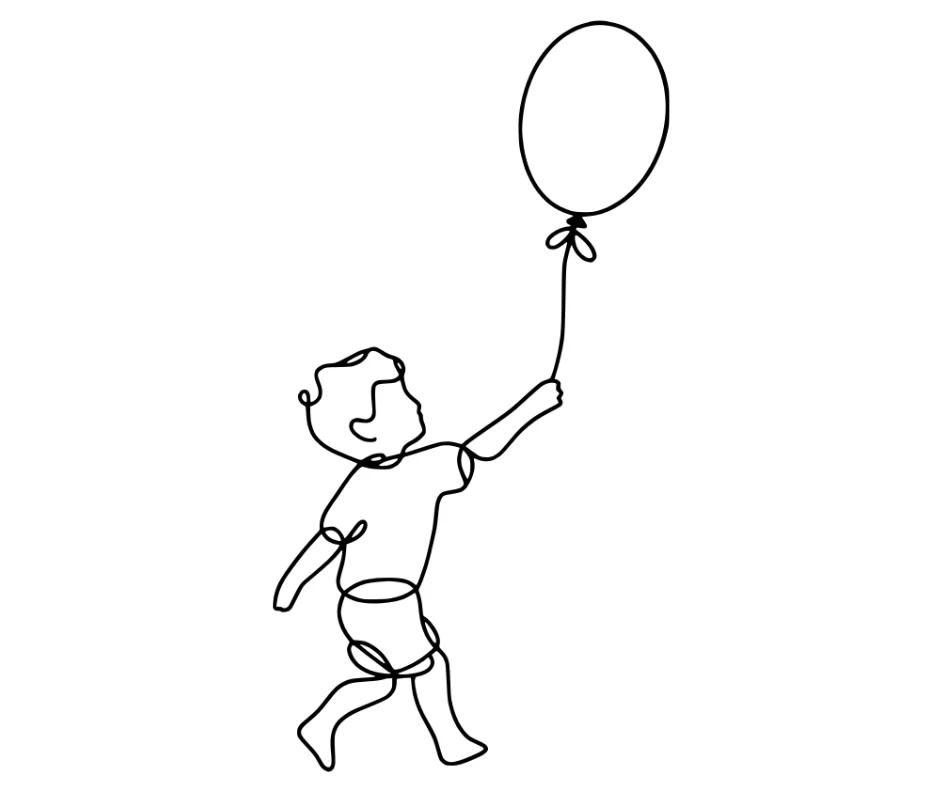
Picture a toddler learning to walk.
They're not following a lesson plan. Nobody is demonstrating the correct technique and asking them to replicate it. Nobody has set a timeline or a benchmark. Nobody is worried that they haven't achieved the milestone because it's not in this week's schedule.
The child just tries. Falls. Tries differently. Falls again. Tries a variation they invented themselves. Falls in a new way. Tries again. Each fall generates information. Each attempt is a hypothesis, tested, refined, tested again.
That's science. Rigorous, patient, self-directed science. Running continuously, at full intensity, in a human being who has been on Earth for fourteen months.
If we actually recognised what was happening, we'd stop calling it "just being a toddler."
What the body is actually doing
Balancing on two feet is an extraordinary feat of coordination. It requires the integration of the vestibular system, proprioception, visual tracking, muscle calibration, and about a hundred micro-adjustments per second that the brain makes without any conscious input.
No other species does it as efficiently as humans. And humans learn to do it with no instruction whatsoever.
The child doesn't need to be taught to walk. The blueprint is already there. What's needed is opportunity: surfaces to practise on, freedom to fall, time to run enough trials that the system calibrates. The learning happens from inside the child outward, not from outside the child inward.
The seed already contains all the information it needs to become a tree. The child already contains all the information they need to become a capable, curious, self-directed human being.
That's the premise of everything I do. And toddlerhood is where it's most visible.
What we accidentally get in the way of
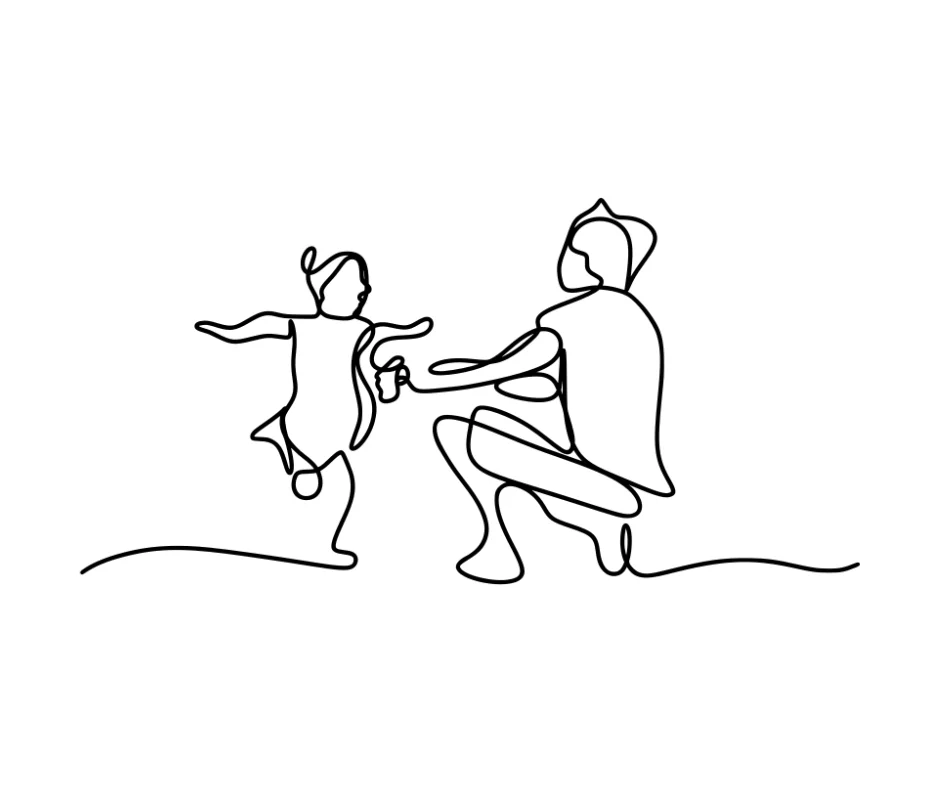
A toddler drawing in the sand is developing the hand muscles and fine motor coordination they'll need to write. A toddler throwing rocks into a puddle is exploring cause and effect, developing visual tracking, learning to predict the relationship between force and outcome. A toddler stepping on cracks and not on cracks is building proprioception, spatial awareness, and the rudiments of pattern recognition.
None of this looks like learning to adults who've been trained to see learning as instruction-shaped. So adults intervene. They redirect. They offer more "appropriate" activities. They sit the child in front of something educational.
And they interrupt a process that was working perfectly.
I've said this to parents in workshops and watched them get quiet. Not guilty, just surprised. Nobody told them the puddle was important. Nobody told them that the seemingly random mess-making was development in its most efficient form. How would they know?
That's the gap. Not bad parenting. Missing information.
What recognition makes possible
When you understand what a toddler is actually doing, everything changes. Not what you do for them. How you see them.
They stop being small people who need to be filled up and start being scientists who need a well-equipped laboratory. Messy. Noisy. Full of failed experiments. But running the right experiments, in the right order, at extraordinary speed.
Your job shifts. Instead of providing instruction, you provide environment. Instead of directing attention, you protect it. Instead of filling in with educational content, you get out of the way of the content they're already generating.
This is harder than it sounds. Sitting on your hands while a toddler works out a problem they could solve in thirty seconds if you just showed them, that takes patience and genuine trust in the process. But it's the intervention that actually helps.
The children I've watched who thrived early, who arrived at school ready and curious and capable, almost all came from environments where adults had learned to trust the development. Not neglect it. Trust it. Watch it. Support it without overriding it.
There's a difference. It's the most important difference in early childhood.
Want to know what the first five years actually need?
The 10 Essential Activities guide maps exactly what early development needs in the first five years, including the activities that build the foundations for everything that follows.
Find out about the workshop →