Ages 0–5
Your 3-year-old throws rocks into puddles.Jumps in after them. Goes for the biggest one they can find. Every time. Without fail.There is a reason for that.
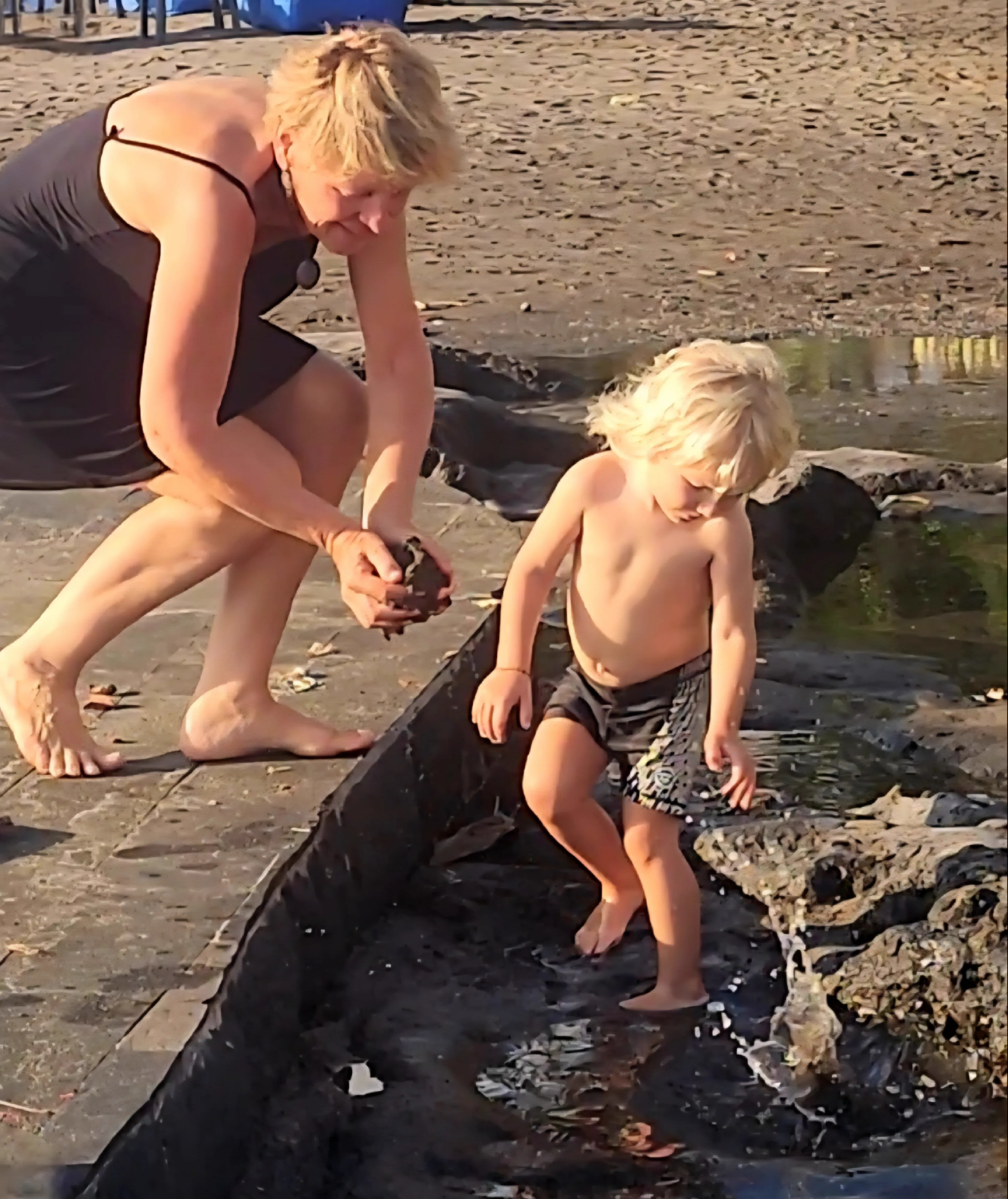
This isn't random. It isn't mess. It's a developmental drive, one of the most important ones in early childhood.
When you understand what it's for, you stop trying to redirect it. You lean in.
That's what the 7 Seeds of Success® teaches you to do.
Simple everyday activities. Free to download.
Are you doing enough?
Most parents ask that question. And it's the wrong question to ask.
What I've observed for over thirty years is parents exhausting themselves, mentally and financially, on things that are actively working against what they want for their children. They're doing more, thinking it's pushing their child forward. It's doing the exact opposite.
Parents simply don't know this stuff. It's not taught anywhere. So they don't know what matters, and they prioritise what other people tell them to. I call it unintentional ignorance. Nobody's fault. But it has consequences.
So, the question isn't whether you are doing enough.
The right question is:
Is your child getting the experiences they need to build skills that will carry them through the rest of their life?
Thirty years of working and learning with children taught me many things. This is one of them:
Putting structured learning before foundations doesn't work in the long run. Those children don't end up better off. They learn to perform. And performance can look like learning, until it doesn't.
The structure built on weak foundations always falls. I've watched it happen too many times to count. This isn't data. It's personal experience of seeing hundreds of children grow up.
The child who doesn't sit still isn't behind.
The child who scribbles, builds things, plays imaginary games, or digs in the dirt isn't avoiding learning.
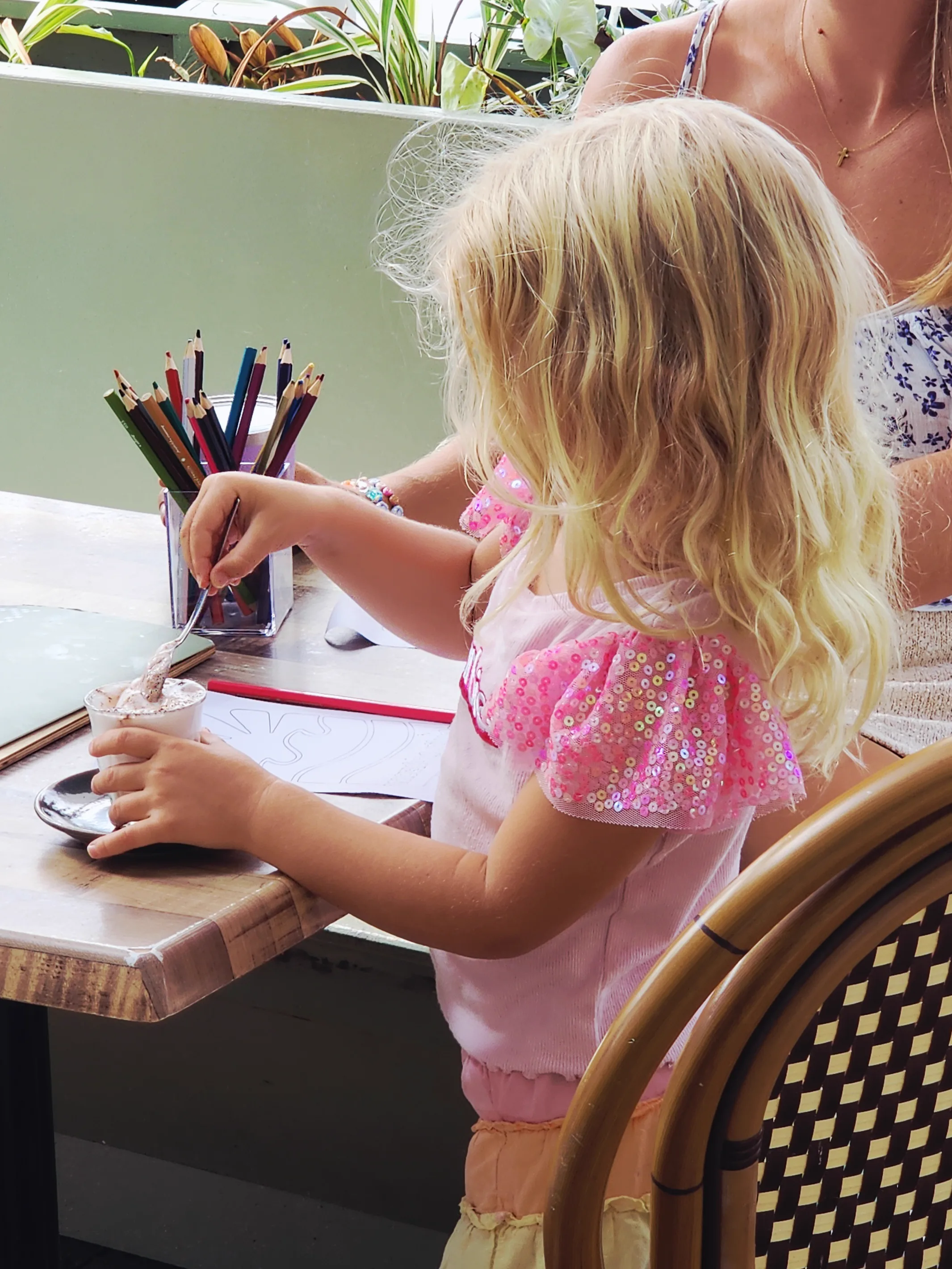
They are learning, growing their body and mind, more effectively than those sitting at a desk forming letters or trying to add and subtract.
When a child draws in the sand, they're developing the hand that will one day hold a pen. A lot of parents don't know this, so they're teaching three-year-olds to hold a pen instead of letting them finetune their fingertip sensation in the sand.
Every child is born with a built-in blueprint, a specific sequence, for growth and development. Most schooling actively works against this internal map. Pushing structured learning earlier and earlier is at the root of much of the struggle that parents and young people are dealing with today.
The 7 Seeds framework is the result of decades of work, study and observation. I have seen children suddenly start to read, develop a sense of humour, become social and coordinated, once missed foundations are laid.
The 7 Seeds of Success describes seven capacities that form the foundation of everything humans do and learn.
Seven Seed Skills, developed in a specific sequence, layered throughout life.
When this doesn't happen, children don't fail. They compensate. They adapt. They find ways around.
They learn, but not what you think they're learning.
The workaround costs: Energy. Attention. Capacity. Over time, it adds up.
This age is when the first seeds are being sown on their own, every day, in ordinary play. Your job is lighter than the marketing says: watch what your child seems compelled to do, know what it means, and expand on that.
When you get that right, everything else follows.
I once watched a toddler, around 18 months, do a perfect downward dog in the middle of a shopping centre, head on the ground, backside in the air. At that age nobody blinks. Their body is asking for the movement, so they do it. The same drive is still there in the eight-year-old who didn't get enough of it, but by then they're too embarrassed to drop to the floor of a shop, and most adults would stop them anyway. So the gap stays a gap. This is why, when you can't let a movement happen in the moment, you remember it, go home, and do it yourself on the living room floor. Your child will join in. Their body knows what it's looking for.

The 5-week "Raise Brilliant Kids" workshop is where you learn and recognise the structure that has always been there.
Join the workshop series →Carrying one specific worry?
Maybe it's that they won't follow instructions. Roots is a free ten-minute walk-through: you watch your child, find where the skill underneath is breaking, and leave with games that grow it.
Try Roots →Seven foundations. An integrated sequence.
The 7 Seeds of Success® describes seven capacities that develop naturally, when the conditions are right. When they're not, children don't fail. They compensate. They adapt. They find ways around.
But the workaround costs energy. Attention. Confidence. Over time, it adds up.
The good news: foundations can be laid at any age. School or not, you need to know what you're looking for.
Internal body awareness
Processing the world through the senses
Cycles, sequences, memory
Imagination, mental imagery, seeing what's possible
Frameworks that channel energy toward results
Directing attention sustainably
Following through, making choices, completion
Try it today. No preparation needed.
The activities guide gives you simple, everyday activities that build the 7 Seed Skills, in the middle of an ordinary day.
Puddle-jumping. Rolling down hills. Humming in the bath. Shadow tracing. Rock collecting.
These aren't fillers. They're foundations.
Free Activities Guide
Simple everyday activities that build the 7 Seeds, in the middle of an ordinary day. Free to download.
Download the free guide →I was dux of my school. I still felt stupid. Kids smarter than me were failing. It wasn't right.
I was good at performing. I knew how to give teachers what they wanted. I was rewarded for it. I also knew that other kids were smarter than me, and yet they were being told they were behind. The gap between what people said and what I felt was something I carried for years.
When I had children, I watched my older son come home from a day at school a different child. Irritable and tearful, his giggle and caring nature gone. I had lost him somewhere between the classroom and the car.
Just like me, he put so much energy into performing that he had nothing left for outside the school grounds.
My younger son was the opposite. He knew the answers, but he arrived at them differently. School wanted him to do it their way. I watched him start to believe that something about him was wrong.
I pulled them out in years 3 and 4.
They are young adults now. Self-directed, capable, making their own lives. They have passed tertiary courses with flying colours, without ever sitting an exam before. Not because I taught them everything. Because we built the foundations, and the rest followed.
That is what this framework does.
More about BeAta →
Every stage of your child's development is doing exactly what it should. You just need to know what to look for.
Ready to go further?
Three ways to keep going.
Five weekly sessions: the complete 7 Seeds framework. Attend and save $300 on Foundations for Life.
Register →A year of transformation. A ten-day in-person intensive as the centrepiece. For parents who want to go deeper.
View details →Not sure where your child is right now? A free call, any age, and you'll leave knowing your next step.
Book a free call →